January 15, 2026
Purpose
In accordance with the regulatory requirements of the Federal Housing Finance Agency (Finance Agency), the Housing and Community Investment Department (HCI) has adopted this Targeted Community Lending Plan (Plan) pursuant to the Community Support Regulation as well as Section 1291.13(a)(1) of the amended Affordable Housing Program (AHP) Regulation.
Scope
This Plan covers areas in need of the provision of significant financial resources, including credit for community lending activities, and the assessment of the housing and economic development needs and market opportunities occurring within the Fifth District as outlined in 12 C.F.R. Part 1290.
Roles and responsibilities
This Plan will be periodically reviewed and updated by HCI and approved by the Board of Directors (the Board).
Interpretation and administration of this Plan is the responsibility of HCI. Specifically, HCI is responsible for maintaining this document, promoting the Federal Home Loan Bank of Cincinnati’s (FHLB’s) HCI programs, reporting to the Finance Agency, and reviewing applications to HCI programs. Programs administered by other FHLB departments that address HCI needs and further HCI’s objectives are also included in this document.
Market research/assessment
The FHLB conducted surveys, outreach, and online research in 2025 to assess the housing needs within the Fifth District as well as to understand trends in the housing market and the evolving economy across the nation as a whole. The housing needs assessments of Kentucky, Ohio, and Tennessee were independently reviewed and analyzed, in addition to The State of the Nation’s Housing Report 2025 and several documents from the U.S. Department of Housing and Urban Development (HUD) detailing the current climate of the nation’s housing market and goals of the federal government. Several other sources were used to assist in fully understanding the needs and changes in housing nationwide. Common themes such as racial disparities, climate readiness, housing availability, and rising costs were found across much of the literature covering both the nation and the Fifth District. The lack of affordable housing for the lowest income levels, the racial homeownership gap, the increasing number of households experiencing housing cost burdens, and the increasing number of climate disasters throughout the United States are just a few of the detrimental issues affecting the Fifth District, the details of which are outlined below.
Kentucky
To determine the housing needs of local communities unique to the Fifth District, FHLB looked to the most recent housing needs assessments published by the state housing finance agencies of the Fifth District. The 2025-2029 Consolidated Plan and the Housing Supply Gap Analysis 2024-2029 from the Kentucky Housing Corporation (KHC) details the needs and goals identified by KHC and the Department for Local Government (DLG) for 2025 through 2029 based off of market research conducted in January 2024 by Bowen National Research. The needs identified in Kentucky by KHC and DLG, which influence the distribution of federal funding, include the need to increase the supply of affordable homeownership and rental units; the need to preserve the existing supply of subsidized rental units; the need to identify permanent housing solutions for persons experiencing homelessness; the need for salaries to keep pace with rising housing costs; the need to support local government’s efforts to increase their job/tax base, improve and expand public facilities, and offer services tailored to local needs.
The National Low Income Housing Coalition (NLIHC) states in their 2025 report, titled “The Gap,” that overall Kentucky possesses an excess of available rental units for households at 100 percent of the area median income (AMI), while only 43 units exist for every 100 extremely low-income households, leaving a wide gap in the resources available to those with the lowest incomes compared to those with higher incomes. “The Gap” also highlights that 68 percent of those households at or below the extremely low-income threshold experience severe housing cost burden, compared to only four percent of households between 51 to 80 percent AMI. This further highlights the widening gap of housing affordability for those earning the lowest incomes compared to those at higher income levels.
KHC also places an emphasis on the changing living dynamics within the population, with a rise in the number of foreign-born households. Higher poverty rates for families with one foreign-born parent as well as those with disabilities are also highlighted. KHC also provided a breakdown of housing cost burdens held by each income level by race/ethnicity. Overall, Black and African American households, as well as Pacific Islander households, each experienced a disproportionate percentage of cost burden compared to the overall population and other ethnic and racial groups. As a result, KHC seeks to create new affordable housing, incentivize partnerships with agencies that will provide services to households with special needs, create educational programs for tenants and landlords to help combat discrimination, and improve the existing housing stock, particularly because the utility and upkeep expenses for the latter create additional affordability issues for tenants and owners.
KHC also noted an uptick in the population within Kentucky, which mirrored an uptick in diversity of the racial and ethnic groups compared to previous years. Although 84.8 percent of the overall population in Kentucky identifies as white, the white population is proportionally underrepresented in the populations experiencing homelessness and housing cost burdens. It is also noted that poverty is much higher within the rural areas of Kentucky compared to the cities, with poverty rates in some Appalachian counties at two to three times the national rate. The Appalachian region in Eastern Kentucky experiences disproportionate levels of poverty and housing problems, which includes substandard housing and disproportionate utility bills due to low housing quality, compared to any other region in the state. Additional programs are therefore needed in Kentucky to address these racial and geographic disparities as well as to assist Kentuckians in obtaining affordable housing and financial assistance.
An article published by State of the South, written by the President of the Mountain Association, Mr. Peter Hille, describes the economic investment and development that has been lacking in Appalachian Kentucky after the exit of the coal industry 70 years ago. The article describes the aftermath of the downfall of coal and the need in Appalachia for more investment in community development in order to create communities that anyone would find desirable as a home. With the new era of virtual work, Mr. Hille encourages community developers to invest in the abandoned small towns of Appalachia to continue the growth that has been recognized over the last few years. By revitalizing Appalachian downtowns, Mr. Hille states, people will be encouraged to return to these small towns to live and bring with them a robust new economy.
As the population continues to rise, housing dynamics are also changing, notably in Northern Kentucky, but also throughout the nation. There has been a shift in recent years away from the standard three- to four-bedroom rental units or houses and towards one- to two-bedroom units and houses. Per the Regional Summary of the Northern Kentucky Area Development District (NKADD) Housing Data Analysis Results, the Northern Kentucky area has seen a decrease in household size since 1970, from around 3.50 people per household, to its current state, ranging from 2.37 to 2.59 people per household. This resembles the national trend of increasing numbers of smaller household sizes in addition to increasing numbers of non-familial households. The number of children attending public schools has also decreased from 2015 to 2023, supporting the idea that single-person, couples without children, and elderly households are increasing relative to the traditional familial household. This reflects the need for a conversion in the housing supply to match the declining household size. The need for workforce housing was also emphasized in the NKADD Housing Data Analysis Results; specifically calling for, “3,260 units for workforce households (wage range $15 - $25, monthly housing cost $500 - $1,500) including 1,860 1- and 2-bedroom units, to increase the region’s economic development and employment.” The need for smaller units, affordable to those in smaller household sizes, is a trend also documented at the national level, which emphasizes the need for affordable housing at all income levels, as well as the need for smaller units to adjust to smaller household sizes and their subsequent affordability.
When the current housing supply in Northern Kentucky was evaluated by NKADD on both the number of bedrooms as well as the income needed to afford those units or houses without the household becoming housing cost-burdened, a large need was revealed for more affordable housing, particularly for renters looking for one- to three-bedroom units with a household income less than $75,000. Based on NKADD’s Regional Summary, there is predicted to be a demand two and one-half times greater for owner-occupied housing than for rental units in the next five years. It is also predicted that there will need to be about 3,025 more units or houses in Northern Kentucky for those with a household income less than 60 percent of the AMI, which is about three times the number of units than the moderate-, middle-, and higher-income groups need. These statistics align with the national need for more affordable housing for smaller households with smaller budgets.
Ohio
The Ohio Housing Finance Agency (OHFA) produced four housing needs assessments in 2024-2025, one for each unique development area within the state: urban, suburban, rural, and Appalachian, in addition to the OHFA 2026 Annual Plan. Each of the four assessments addresses the lack of affordable housing supply for very low-income households looking to buy or rent homes, noting that only 58 affordable rental units exist in the state for every 100 low-income renters and that this group is essentially priced out of most home purchase opportunities In the first quarter of 2024, the homeowner vacancy rate in Ohio fell to 0.3 percent, which was the lowest on record, with the rental vacancy rate not far behind at a near-record low of 4.4 percent. However, by the end of 2024, rates had increased to 1.1 and 7.2 percent, respectively, which indicates a turning of the market and potentially a less competitive market in the future for both renters and homebuyers. OHFA identifies the slow rate of salary increase compared to the accelerating rate of rent increase as a leading reason for Ohio renters becoming severely cost-burdened and at risk of eviction and homelessness. The gap between supply and demand of housing targeting low-income households is also widening and is contributing to the number of cost-burdened renters.
Points that OHFA emphasized as influential throughout the four areas surveyed within Ohio also included the inequalities faced by Black renters and homeowners, severe housing issues, cost-burdened households, tight housing markets, and environmental impacts. The inequalities that Black homeowners and renters face, per the reports, include substantially higher poverty rates, lower homeownership rates, higher likelihoods of being denied a mortgage, higher likelihood of being housing insecure, higher rates of being cost-burdened, and higher eviction rates compared to white homebuyers, homeowners, and renters, especially in urban areas. The reports also touch on severe housing issues faced by Ohioans, which include the lack of affordable housing for low- to extremely low-income households as well as severe housing issues as defined by HUD that include incomplete kitchen and plumbing facilities, severe overcrowding, and severe rent burden. Ohio’s carbon footprint is also emphasized in the reports, with Ohio having a yearly average emission of 15.7 metric tons of carbon dioxide equivalent from home energy use per household. New construction and rehabilitation of the existing housing stock to create energy efficient homes would reduce the greenhouse gas emissions of Ohioans as well as lead to energy cost savings for households. Energy efficiency and renewable energies are therefore areas of opportunity for the Ohio multifamily and single-family housing stock.
OHFA also identified issues within each unique development area. In urban areas, homelessness and housing instability of Ohioan students was emphasized, as over 15,000 students in grades K-12 in urban school districts lack a fixed nighttime residence; this was echoed in rural areas as well, with over 7,000 students lacking a fixed nighttime residence. High denial rates for mortgages, aging and inadequate housing stock, and increasing rent-to-income ratios were also highlighted in the urban areas as large issues needing to be addressed. Higher homeownership rates and lower percentages of cost-burdened mortgage holders compared to state-wide rates provided an optimistic view of suburban Ohio. However, rents higher than the statewide average continue to render suburban renters more likely to be evicted than renters in other topologies throughout the state. In rural and Appalachian Ohio, a main concern is how the older population will be housed and cared for as the baby-boomer generation ages. High utility costs, lack of reliable internet services, older houses with lead-based paint, and incomplete plumbing and kitchen facilities are also issues that are plaguing both Appalachian and rural Ohio.
The Fiscal Year 2026 Annual Plan from OHFA also confirmed the widening gap in supply and demand for affordable rental units for low-income Ohioans as well as the widening gap between increases in income for most income levels and much greater increases in rent prices, which is contributing to a higher rate of homelessness across the state. From 2006 to 2023, the median gross rent increased 1.2 times faster than incomes for the top 20 percent of Ohio households, and 1.6 times faster than incomes for the bottom 20 percent of Ohio households. On the homebuying side, the reports detail an increasing price-to-income ratio for median home price to median household income, which has led to many potential homebuyers being priced out of the market or to becoming cost-burdened homeowners. On the rental side, there were only 40 available rental units for every 100 extremely low-income households, compared to 101 available units for every 100 households at or below 100 percent AMI, per NLIHC’s “The Gap” report for Ohio. This trend reflects the excess of rental units that are available and affordable to those at higher income levels compared to the limited number of units that are affordable to those households earning less than the area median income. In an effort to remedy these growing gaps, the Ohio 2024-2025 State Budget was signed in July of 2023, which includes the initiation of two new tax credits to address the affordable housing crisis. These two new programs, titled the State Low-Income Housing Tax Credit and the Single-Family Housing Tax Credit, are predicted to help create more affordable housing for low- to moderate-income renter households as well as single-family homes and thereby address some of the state’s housing needs.
Within the FY 2025 Plan, OHFA cited that the median home price in Ohio was higher in 2024 than any year on record, being 2.6 times the median household income. In spite of these difficulties, the homeownership rate rose in Ohio to 70 percent in 2024, which was the highest it had been since 2010. These rising costs could be contributing to the racial gap in homeownership, which has also been widening in recent years. In 2023, the number of white homeowners in Ohio was 36 percentage points higher than Black homeowners, which is higher than the national average and is higher than most neighboring states. Black mortgage holders in Ohio are almost twice as likely to be severely mortgage-burdened compared to their white counterparts, and Black renters are more severely rent-burdened compared to white renters (32 percent to 23 percent, respectively). Mortgage denials and eviction rates were also noted to be much higher in Black households compared to their white counterparts, as was noted in the OHFA regional reports. In the regional reports, OHFA points to historic patterns of redlining and segregation throughout the state to account for these deepening racial disparities and called for targeted programs to reduce these inequalities.
Challenges to the development of the affordable rental housing market that the FY 2025 plan outlines include aging householders and the associated costs of aging in place, the aging housing stock, the unpredictable and underpaying labor market, and the high cost of new construction. To mitigate these deficiencies while also increasing the supply of affordable housing for Ohioan families, OHFA highlighted manufactured homes and community land trusts as cost-effective development models that can serve as less-expensive alternatives to the traditional site-built homes or rental units. Overall, however, effects from the pandemic and increasing costs in several sectors are negatively impacting Ohio households, especially the most vulnerable populations, leaving an increasing need for affordable housing.
Tennessee
The housing needs assessment in the 2025-2029 State of Tennessee Consolidated Plan identifies seniors; persons with physical, developmental, and mental health disabilities; victims of domestic violence; youth aging out of foster care; formerly incarcerated individuals reentering society; families with children; veterans; and persons living with HIV/AIDS as the most at-risk populations in the state for experiencing housing issues and housing cost burden. Other issues identified include a statewide housing shortage, high rents threatening housing security, Tennesseans being priced out of homeownership, and a high number of people experiencing homelessness. The State of Tennessee Consolidated Plan therefore cites supportive services as critical for these populations to remain safe, independent, healthy, and stable and indicates a need for public services such as housing counseling, job training, fair housing education and outreach, and infrastructure improvements in low- and moderate-income communities. Like Ohio and Kentucky, Tennessee identified a number of households with severe cost burden, as well as many experiencing overcrowding and/or a lack of complete kitchen or plumbing facilities. NLIHC’s publication, “The Gap,” cited 71 percent of extremely low-income renter households as being cost burdened. For these renter households, there are only 42 units for every 100 households classified as extremely low-income, compared to 102 units available for those households earning 81 to 100 percent AMI. The State of Tennessee Consolidated Plan identifies the median gross rent in Tennessee as having increased by 29.6 percent from 2018 to 2022, with the median sale price increasing by 65 percent over the same time period. These trends are believed to contribute to the 8,280 individuals experiencing sheltered and unsheltered homelessness in 2024 during the Point-In-Time-Count. These disparities are also prevalent in Ohio and Kentucky, and reflect the national trend of an increasing number of rental units being built or upgraded that target middle- to high-income households with comparatively few units being available for low- or extremely low-income households.
The Tennessee Housing Development Agency’s (THDA) publication, “2023 Tennessee Housing Market: At A Glance,” highlights housing trends throughout the state. Central Tennessee, specifically Nashville, saw the largest population growth within Tennessee from 2016-2021, compared to a decline in population in Western Tennessee. When broken down into the different metropolitan statistical areas (MSAs), the age group that has most recently been seeing the largest change in population is the 65 years or older demographic. THDA emphasizes that, with this significant growth in the older population, a need for smaller houses and houses with amenities to accommodate an older population is growing in all regions of Tennessee.
The Tennessee Housing Development Agency Issue Brief (the Brief), describes the high percentage of those facing rent burden and poverty, specifically in the Black and Hispanic/Latinx communities. THDA’s At A Glance report cites a 22 percent increase in the Hispanic population in Tennessee from 2016 to 2021, which was the largest increase of any single race or ethnicity in the state for that time period. At A Glance also cites that in 2021, 73 percent of white households were homeowners and also comprised the largest percentage of homeowners compared to other races and ethnicities. The homeownership rates among Black and Hispanic households were only 44 percent and 45 percent over the same time period, respectively. Memphis in particular had the largest Black population compared to all of the other large MSAs in Tennessee, yet it was noted as having the lowest homeownership rate of all the largest MSAs throughout the state. The Brief, in turn, further highlights the lack of Spanish language marketing materials and racial bias in home sales as possible barriers to Black and Hispanic/Latinx homeownership. Innovate Memphis asserts that the high volume of predatory lenders has been negatively affecting the Hispanic/Latinx community, which fueled a push in 2022 to further educate the city on how to recognize and avoid predatory loans. Further proposed solutions to these issues include additional fair housing education and advocacy, specifically education related to the rights and responsibilities of renters under fair housing laws as well as educational programs and materials in both English and Spanish for homebuyers to assist in recognizing discriminatory lending practices throughout the state.
FHLB Surveys
The FHLB conducted a survey that was distributed to Members and Sponsors of the Fifth District who attended the Affordable Housing Program (AHP) workshops in Ohio, Kentucky, and Tennessee in April of 2025. All Members and Sponsors who attended the in-person workshops were encouraged to provide their knowledge and expertise from their work in their respective communities by answering questions about the specific needs they have observed, as well as ways that FHLB could better address said needs. As the questions were open-ended, FHLB received a wide variety of responses; however, the need identified the most frequently was the need for more affordable housing for those earning low to very low incomes. The need for more rental and multifamily housing was also identified by many of those surveyed. Other recurring needs or issues needing to be addressed within communities of the Fifth District included lack of available housing stock, rising costs coupled with decreasing affordability, homelessness, rehabilitation for rental and ownership properties, funding for disaster repair and relief, loss of other funding sources, the aging housing stock along with the aging population, workforce housing, and permanent supportive housing.
Native Americans
The Native American population in the Fifth District is relatively sparse. As identified by Oweesta Corporation, a nationally recognized Native non-profit and community development financial institution (CDFI), there are approximately 237,000 Native Americans within the Fifth District, all of whom would be considered underserved as they are without clear avenues for culturally relevant financial empowerment opportunities. However, these individuals that identified as Native American and Alaska Natives on the U.S. Census are not a part of a federally- or state-recognized tribe per the Bureau of Indian Affairs. There are now currently no federally- or state-recognized tribes within the Fifth District. HUD programs such as the Section 184 Indian Home Loan Guarantee Program, which was established to facilitate homeownership in Native American communities, deemed Ohio, Kentucky, and Tennessee ineligible for these programs, as they only assist federally-recognized tribes or those belonging to a federally-recognized tribe. None of HUD’s financial assistance programs provide aid to individuals who identify as Native American who are not a part of a federal- or state-recognized tribe, as it is through being recognized as a tribe or affiliated with a tribe that groups’ and individuals’ heritage is verified by the government. Additionally, none of the Housing Finance Agencies within Ohio, Tennessee, or Kentucky currently offer, nor have plans to offer, programs to assist Native Americans or Alaska Natives. The FHLB attempted outreach to several Native-focused organizations to establish relationships and identify potential avenues the FHLB can assist the Native population(s) residing in the Fifth District in 2024, including beginning conversations with Oweesta Corporation to explore opportunities to support the Native populations within the Fifth District.
Racial Disparities
FHLB also looked to publications addressing housing on a national level to assess market needs. Harvard University’s (Harvard’s) Joint Center for Housing Studies produced “The State of the Nation’s Housing 2025,” which emphasized the rising costs of homeownership as a barrier to closing the racial homeownership gap. In 2019, the homeownership rates of Black and Hispanic households began to slightly outpace the US average; however, as the prices of homes continued to rise, Black and Hispanic households were increasingly priced out of the market. In 2024, only 7 percent and 11 percent of Black and Hispanic renter households, respectively, had sufficient annual income to afford the monthly payments on the median priced home without becoming cost-burdened. These percentages of Black and Hispanic renter households reflect a 65 and 62 percent drop in households able to afford the payments on a median-priced home since 2021. In comparison, 15 percent of white households could afford the same monthly payments, which reflects a 55 percent decrease for this demographic between 2021 and 2024. Initiatives such as down payment assistance programs, special purpose credit programs, and programs that increase access to affordable credit were proposed by Harvard as ways to help combat the racial homeownership gap.
NLIHC cited the gap between wages and rising housing costs to be the greatest for people of color compared to other races and ethnicities. People of color are also more likely to be renters at all income levels, leaving these households as the most vulnerable with the cost of rent rising nationwide. About 32 percent of Black renter households and 29 percent of Latinx renter households nationwide are categorized as being severely cost-burdened, compared to 24 percent of the white renter population. The highest median household incomes were held by white and Asian households in 2022, at $81,000 and $109,000, respectively. These numbers far outpace the $52,000 and $63,000 median household incomes that Black and Hispanic households earn, highlighting the necessity of higher incomes for Black and Hispanic households to bridge this racial inequality.
Furthermore, HUD’s Worst Case Housing Needs report describes an increase of 334,000 Black renter households and 246,000 Latinx renter households from 2019 to 2021 who are now considered as having worst-case needs compared to an increase of only 23,000 white households. Disparities in income, wealth, and access to credit are highlighted as the most common and influential barriers for Latinx and Black communities in obtaining economic and housing equality and security. Reducing racial homeownership gaps is cited as being critical to the economic health of the housing market as well as local economies. Recognizing its ability to influence these metrics, Fannie Mae spearheaded the Appraiser Diversity Initiative, the objective of which is to recruit Black and Latino candidates to train and take courses offered via scholarship to become an appraiser. This initiative’s goal is to reduce the racial gap in the appraisal field, which would subsequentially lead to less racial bias that currently affects Black and Latino homebuyers.
According to the Housing and Financial Capability Survey conducted by NeighborWorks America, there has been an increase specifically among ethnic minority groups in the pursuit of homeownership. One-third of Americans are said to be looking for new housing, with a large portion of this population being Latinx and Alaska Native or Native American. However, survey results show that, within the Hispanic population in particular, increasingly more people believe that their current financial situation makes homeownership unrealistic. Per Harvard’s report, Black and Hispanic homeownership rates still linger 27.7 and 25.2 percentage points below white homeownership rates. Black and Latinx homeownership levels are consistently lower than their non-Hispanic white and Asian counterparts at every income level; as Harvard and OHFA describe, and these trends are the results of a nationwide history of segregation and redlining that can only be corrected with pointed programs to assist disproportionally affected communities in achieving economic, housing, and racial equality.
Since 2019, there have been twelve different down payment assistance programs across the nation that target first-generation homebuyers. The National Fair Housing Alliance’s research indicates that, nationwide, 12.2 million households would qualify as first-generation homebuyers with incomes less than 120 percent of their respective AMI. Approximately 72 percent of these households would be households of color, and 43 percent would be Black households. The large percentage of households of color that would qualify as first-generation homebuyers, coupled with the large gap in homeownership rates of Black and Hispanic households compared to white households, indicates that households of color have disproportionally been unable to obtain homeownership and thus unable to create generational wealth. In its 2024 Equitable Housing Finance Plan, Fannie Mae also asserts that the racial disparities in homeownership are directly correlated to the lack of generational homeownership, which has led to Fannie Mae prioritizing the creation of a standard “first-generation” definition and subsequent programs targeting down payment assistance for first-generation homebuyers. The Urban Institute also explains that, since households of color are less likely to have homeowning parents, the average amount of accumulated wealth per household is expected to be significantly lower for households of color, which is predicted to lead to less financial assistance for homebuying children compared to children whose parents are homeowners. The goals, therefore, of the down payment assistance programs targeting first-generation homebuyers are to address the racial wealth gap and assist first-generation homebuyers, who are predicted to be largely households of color, in generating wealth through homeownership to be passed down through generations. Without addressing the racial homeownership gap, the National Fair Housing Alliance predicts that Black homeownership rates will continue to fall, which could lead to detrimental economic consequences across the country.
Climate Action
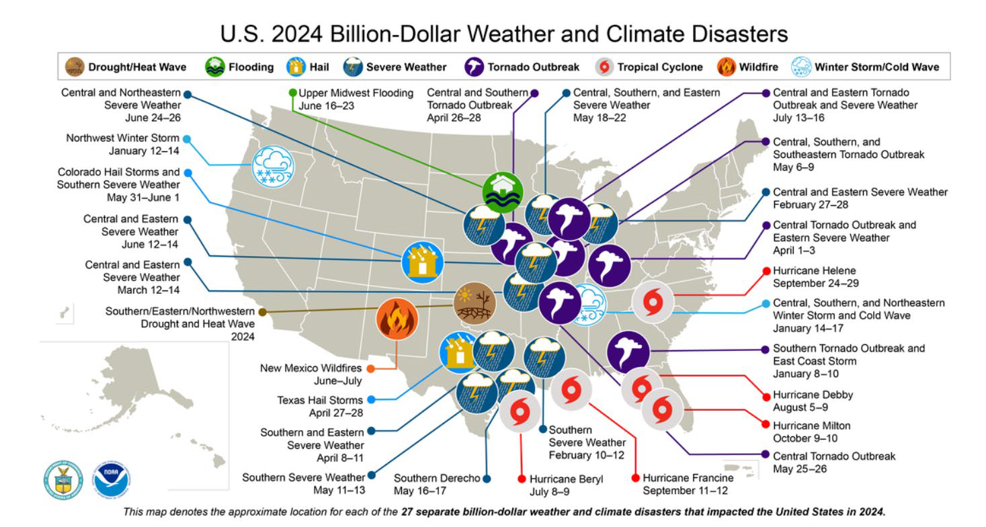
The need for funding for repairs and improvements for the existing housing supply, including but not limited to climate readiness, in order to mitigate and minimalize the effects of climate change is cited in both “The Gap” report and by Harvard. A record high number of billion-dollar weather and climate disasters occurred in 2023, with 28 hitting the U.S. In 2024, 27 events totaling at least $182.7 billion led to the fourth costliest year on record for climate disasters, according to the National Oceanic and Atmospheric Administration (NOAA.). It is predicted that 61 million homes within the United States are within areas categorized to have at least moderate predicted loss in future disasters. Within the Fifth District, these areas are primarily in Tennessee, with a moderate amount in Kentucky and a few in Ohio. The number of billion-dollar climatic events in 2024 are depicted by region and type of event in the map below. In 2024, the majority of the billion-dollar climatic events were severe weather, followed by tornadoes, both of which occur in the Fifth District. There have also been several other events across the nation and in the Fifth District that have resulted in severe destruction and financial loss that are not accounted for in the numbers previously mentioned, as their total costs registered less than $1 billion for the single event, or because the totality of the damage is still being assessed.
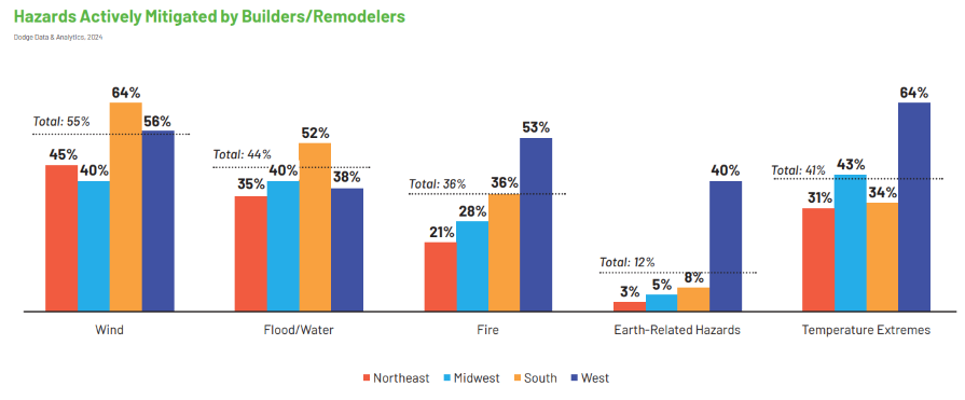
From the National Association of Home Builders’ Green and Resilient Single-Family Homes 2024 SmartMarket Brief, the graphic below lists the most common hazards encountered in each region throughout the United States. The states within the Fifth District are included in the data points for the South and Midwest, whose most frequent mitigation and repair efforts by home builders and remodelers are caused by damages due to wind, flooding, and temperature extremes. However, as was demonstrated in Eastern Tennessee from Hurricane Helene, disasters and extreme weather that were not previously considered common in the Fifth District are beginning to make unprecedented appearances and cause severe damage to the communities that they touch.
Despite the increasing number of climatic events, the majority of government funding has been historically allocated to response actions for past damages while appropriating little funding to prevent or build resilience against future disasters. To combat the growing risk of climate disasters to the 61 million homes predicted to be affected by climate disasters in the future, and to build more resilient communities, Harvard recommends additional funding for climate preparedness projects, which would also ensure that communities recovering from climate disasters will be more resilient in the future, as well as educating communities on risks and prevention methods. These programs would cost less overall than recovery efforts and would yield greater savings compared to remediation efforts after a disaster strikes. Policies to prevent or decrease future development in high-risk areas are also needed to mitigate loss in the future.
HUD’s Climate Action Plan emphasizes the exacerbated effects that climate disasters already have on vulnerable populations and the pre-existing inequalities that vulnerable populations face due to historic disinvestment and racial segregation within communities. HUD details the need and its subsequent commitment within the Climate Action Plan to reduce greenhouse gas emissions, increase community resilience to climate change, deliver environmental justice, and promote racial equality, with the overarching goals of helping communities across the United States build more resilient infrastructure, facilitate more energy-friendly utility consumption, and address growing environmental injustices. HUD also plans to increase its investments in climate resilience modifications and add incentives for new construction with green building designs. In June of 2024, HUD updated its Climate Adaption Plan to establish protocols to include climate resiliency in various funding opportunities, such as climate change points in the Notices of Funding Opportunities to encourage projects to invest in renewable energy, climate resiliency, and energy efficiency. According to the U.S. Department of Energy, up to 40 - 50 percent of the average American’s annual energy expenses could be saved with energy-efficient appliance updates and housing improvements. Investing in these modifications and improvements could therefore save renters and homeowners, especially those classified as low-income, on unnecessary utility expenses. According to the Department of Energy, with 40 percent of the energy used in the United States coming from homes and commercial buildings, and 18 percent of the greenhouse gas emissions in the United States coming from housing, there is a large potential for green improvements by updating and building new energy-efficient and renewable energy infrastructure.
Fannie Mae’s 2024 Equitable Housing Finance Plan and the National Association of Home Builders’ Smart Market Brief 2024 draw attention to the upward trend of homeowners insurance and flood insurance prices due to the increasing financial threat of natural disasters. The two publications report an increasing trend in insurance companies refusing to serve certain markets that are at high risk of flood and fire. Those households who have the privilege of obtaining insurance for their homes are increasingly met with steep increases in price. The increases being faced in these markets has only added to the housing cost burden that many households are facing, while those who are priced out of the insurance market, or whom insurance companies are refusing to serve due to the high risk of natural disasters in the area, are left increasingly financially vulnerable as natural disasters are accelerating in frequency and level of destruction.
Mobile and Manufactured Homes
Classified as being built before June 15, 1976, there are an increasing number of mobile homes that have surpassed their viability and are no longer financially serving those who reside in them. Within the Fifth District in particular, the State of Tennessee’s 2025-2029 Consolidated Plan & 2025-2026 Annual Action Plan states that about eight percent of Tennessee’s housing stock was recorded as being mobile homes. Kentucky, however, had the highest percentage of mobile homes in the Fifth District with 12 percent of the housing market as of the 2020 Kentucky Housing Market Analysis. Since mobile homes do not meet the standards set by HUD, there has been a nationwide push to transfer households from mobile homes into more efficient, affordable homes. Due to historic zoning policies, much of the mobile home stock is located in low-lying areas that are more prone to flooding, which serves as another detriment and expense to those who reside in them, especially considering the increasing number of climate disasters and the income levels of the households that inhabit them. In a focus group conducted by THDA, a participant explained that some landlords of mobile home communities go so far as to forego maintenance and repairs on their properties out of confidence that renters would be unable to afford to move to another property. More efforts are therefore needed to protect those who reside in mobile homes from both climate and financial hardships.
Manufactured homes, on the other hand, have been increasing in popularity as the alternative to mobile homes. Manufactured homes meet all of HUD’s standards and do so at a price that can potentially be less expensive than site-built homes. In June of 2023, HUD introduced the Office of Manufactured Housing Programs as an independent office within the Office of Housing as a way to recognize the potential of manufactured homes to mitigate the critical shortage of affordable housing nationwide. In September of 2024, HUD announced one of the most extensive update packages to the Manufactured Home Construction and Safety Standards. The updates will eliminate the need for manufacturers to obtain extra construction and manufacturing approvals for homes that already meet or exceed HUD standards. This is expected to decrease costs and time needed to build these homes, while also allowing builders to accommodate more modern, sought-after features to render the manufactured homes more similar to site-built homes. Especially with the new HUD regulations, manufactured homes are seen as a secure, affordable, and high-quality housing option and a particularly viable alternative for those living in mobile homes. As described by the National Consumer Law Center, modern manufactured homes can serve as a steppingstone to long-term financial security for those in low- or moderate-income families.
In their respective “Duty to Serve Underserved Markets Plan 2025 – 2027”, Freddie Mac and Fannie Mae list several set-backs that the manufactured housing market is currently facing as well as plans to assist in reviving this market to meet the goals set by the Finance Agency to address the housing crisis across the country. Key issues facing the manufactured housing market currently include the number of manufactured homes titled as personal property rather than real property, the volatile and elevated interest rate environment, zoning and land restriction, the public perception of manufactured homes, the disaster-prone areas that manufactured homes are often built in, and limited supply of manufactured homes.
Since many lenders are reluctant to provide manufactured housing mortgage financing due to historic poor reputations, including poor loan performance in the 1990s that resulted in high rates of delinquencies, defaults, and repossessions, many people interested in manufactured homeownership are only able to obtain personal property loans. Being titled as personal property eliminates the benefits of mortgage financing, which will end up costing borrowers more over the long term and affords fewer consumer protections. Lack of comparable data used in the appraisals of manufactured homes and outdated appraisal guidelines has been leading to undervaluation of manufactured homes and overestimation of the borrower’s cost burden during the appraisal of manufactured housing as real property as well. Freddie and Fannie are therefore planning on enhancing their existing product offerings to increase the support for manufactured homes, conducting and publishing research to identify solutions for expanding affordable lending and access to credit, and will be seeking approval with the Finance Agency to engage in loan purchase activity for personal property loans.
Freddie Mac and Fannie Mae hope that by providing new data, especially on areas not previously researched, they can help to raise the visibility and the image of manufactured housing to encourage its acceptance and use amongst lenders as well as homeowners. Currently, according to Freddie Mac, the demand for manufactured homes by homebuyers is strong, but supply chain delays and subsequent cost increases has led to delayed growth of this market in recent years. Increasing their existing product offerings for the manufactured housing market as well as continuing outreach efforts and advocating for consumer protection requirements, the latter particularly for manufactured housing communities, are other ways that Freddie Mac and Fannie Mae are encouraging lender participation in the manufactured housing market and increasing the protections for homebuyers. Especially due to the current tightness of the housing market across the country, the affordability of manufactured homes is a vital option in providing much needed affordable housing and in closing the current gap in housing needs for very low-, low- and moderate-income households.
Cost Burdens, Housing Supply, and Housing Modifications
In the upcoming years, the United States needs to have preparations completed for the aging baby boomer generation. This demographic will be the fastest-growing segment in the population, and there will be an increasing need for housing to support their safe aging in their communities. Accessibility modifications to their current housing would also assist households in avoiding nursing home costs. According to the Federal Reserve Bank of Philadelphia, there are about $149 billion worth of home repairs needed across the nation, with $57 billion of them needed for low-income households. An estimated $10.4 billion is also needed to repair homes occupied nationwide by those 65 years and older who are experiencing an energy cost burden due to inefficient infrastructure. In addition to the aging population, the public housing stock is also aging and requiring repairs after many years of insufficient funding.
Housing prices reached an all-time high in early 2025, with the U.S. home price index augmented by 60 percent since early 2019, according to Harvard. Mortgage rates only decreased by 0.1 percent from 2023 to 2024, landing at an average of 6.7 percent, with the average monthly mortgage payment being $2,570 for a 30-year, fixed rate mortgage, which is about 40 percent higher than in 1990, after adjusting for inflation. According to Harvard, only about six million of the 46 million renters in 2023 were making the $126,700 necessary to afford this mortgage payment. The inability to afford a down payment was the primary reason that renters did not venture into homeownership, and those who did become first-time homebuyers in 2024 were older than the historical average and had higher incomes, yet it was reported that these homebuyers still relied on family and friends for assistance with the down payment. The number of first-time homebuyer loans dropped by 32 percent from the 2021 peak.
In addition to the exponential increases to the costs of buying a home, homeowner insurance premiums grew an average of 14 percent in 2024 alone, and 57 percent over the last five years. Property taxes also continue to increase, adding to the cost burden of homeownership. In 2024, these rising costs have contributed to the fall of the U.S. homeownership rate for the first time in almost a decade. The homeownership rate continued to decrease in the first quarter of 2025, with the population under the age of 35 having the most significant decline out of all other demographics. The ratio of the costs of a new home compared to household income has also returned to 2022’s record high of 5.0, compared to a 3.2 ratio from the 1990s. Harvard asserted that, combined with the increase in purchase prices, mortgage rates, and insurance prices, stagnant salaries and the lack of homes for sale on the market have also been a major challenge for those looking to purchase a home.
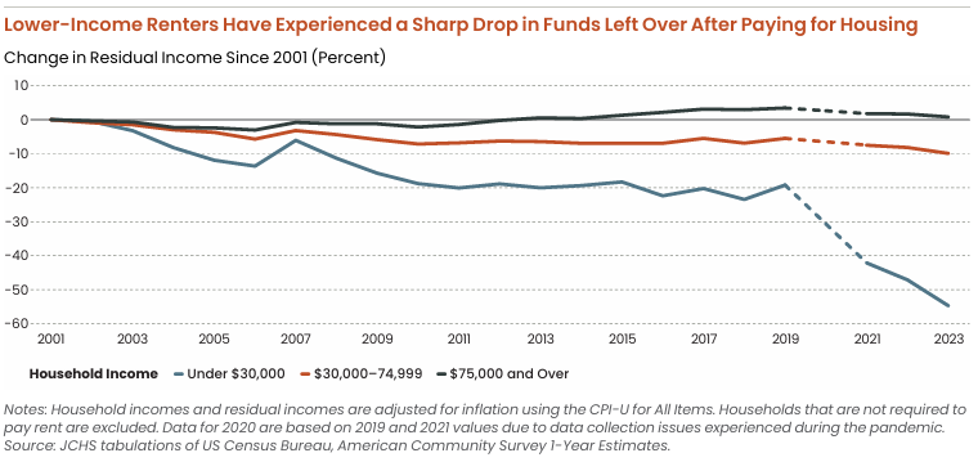
Harvard also noted the need for expansion of subsidy programs for renters to improve their efficacy, as rent costs continue to rise, and new construction targets the higher end of the rental market. Trends in Harvard’s report show the increase in cost-burdened renters between 2019 and 2023 nationwide as going from 20.4 million to 22.6 million, while the number of severely cost-burdened renter households hit a record high at 12.1 million in 2022 and stayed steady in 2023. These increasing figures create the ever more urgent need for moderately-priced rental housing. Moderate-income renter households, or those earning between $45,000 and $74,999 in annual income, have experienced the fastest growth in renter households becoming cost-burdened, with their rates doubling to more than 45 percent from 2001 to 2023. This income group also saw their residual income, or income left over after housing costs, fall by 10 percent since 2001; renters with household incomes below $30,000 had a median residual income of $250 per month, which is an average 55 percent decrease since 2001. Per NLIHC’s report, “The Gap,” of the 10.9 million renters with extremely low-incomes, there are only 3.8 million units available and affordable to those households, leaving only 35 rental homes available and affordable to every 100 extremely low-income renter households. These estimates are also conservative, as they are based on surveys conducted using addresses; the shortage of 7.1 million homes for extremely low-income households is therefore an underestimate, as it does not include homeless households.
Along with Harvard, NLIHC attributes the rising number of cost-burdened households to the increasing rent prices, the stagnant or slowly increasing wages, and the shortage of units affordable to lower-income households. In 2024, however, there was a surge of multifamily units completed, with over 608,000 units added to the market, which was the highest rate of increase since the 1980s, according to Harvard. Unfortunately, this surge of market entrants was a partial trigger of a downward trend of new multifamily construction starts; 354,000 units started in 2024 signals a 25 percent decrease year-over-year. Harvard attributes this downward trend in part to high interest rates and the high number of units coming onto the market. Since the pandemic, there has been a net loss of low-rent units on the market mirrored by a small gain in higher-rent units, which matches observations in the Fifth District of a deficit of housing for low-income households coupled with a surplus of units priced for higher-income households. However, as a result of the increase in the production of multifamily units over the last several years, vacancy rates have increased by 0.5 percentage points to 7.1 percent. However, according to Harvard, the apartment sector that typically houses renters at higher incomes experienced a vacancy rate drop in the first quarter of 2025, which is an indicator of a tightening rental market in the face of strong rental demand.
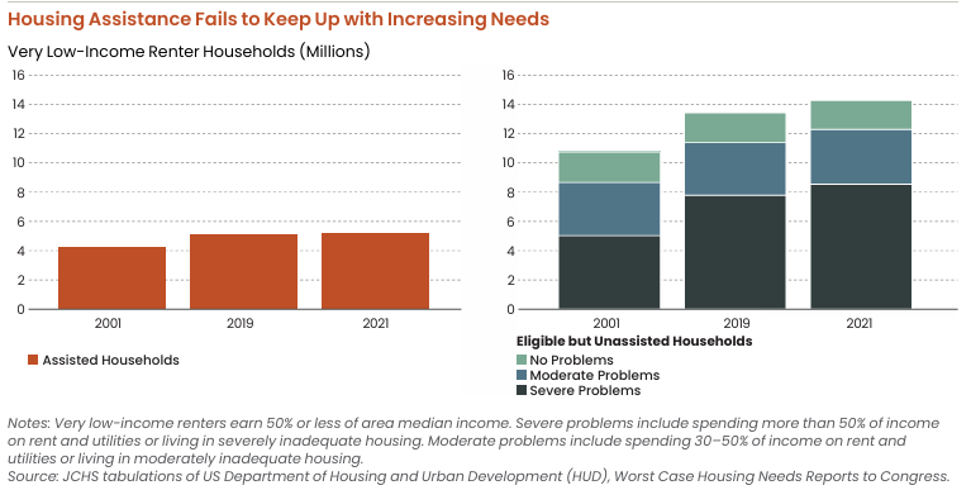
Per the Worst Case Housing Needs report published by HUD in September of 2023, the number of households with worst-case needs reached an all-time high of 8.53 million renter households in 2021, the majority of which are a product of severe rent burden. The report also cited over-crowded housing conditions as being a large problem for very low-income renters, with 92.5 percent of these households being households with children. With rent continuing to rise, low-income renters and homeowners will be in need of additional funding assistance to afford housing, repair homes to preserve their habitability, modify homes for the aging population, preserve existing affordable rental units, access emergency assistance when they experience financial shocks, and better establish themselves in the local economy. In addition to the end of the pandemic assistance funding, many households also had to restart their student loan payments in September of 2023, which had been paused since March of 2020. According to Harvard, an estimated 28 million households carry student debt; the added burden of having to restart payments in September of 2023, with the average household paying $500 per month, also affected the ability of many households to afford the transition to homeownership, which in turn leaves the current generation behind pace compared to previous generations in regard to homeownership rates. Black households are also disproportionally affected by student debt, as they are more likely to carry student debt compared to their white, Hispanic, and Asian counterparts. The extreme impact of the student loan payments on households was highlighted when only 60 percent of all borrowers made their required payments on time after the pause on payments ended.
Summary of identified needs
As a result of the aforementioned, the FHLB has made the following determinations with regards to affordable housing and community development needs in the Fifth District in 2026:
1.Subsidy for the development and preservation of affordable housing for low- and extremely low-income households and vulnerable populations, such as those with special needs, people aged 60 and over, homeless individuals and households, etc.;
2.Operating subsidy for projects serving households with special needs, particularly permanent supportive housing developments;
3.Subsidy for owner-occupied rehabilitation and preservation of existing affordable rental housing;
4.Mobile home replacement;
5.Addressing disparities in housing cost burden and homeownership rates for minority households and/or first-generation homebuyers;
6.Climate resilient and energy-efficient constructions and renovations;
7.Funding to increase the supply of homes at entry-level price points;
8.Both ownership and rental housing for extremely low-income households;
9.Housing for middle-income households;
10.Financing for one- and two-bedroom ownership and rental housing;
11.Liquidity for non-depository CDFIs; and,
12.Education and technical assistance to Members, community financial intermediaries, and public and private economic development partnerships and organizations in both English and Spanish, specifically targeting homeownership education and predatory lending awareness.
2026 HCI programs
In 2026, the FHLB will continue to offer the following programs:
Community Investment Program and Economic Development Program
Both the CIP and EDP provide discounted Advances to encourage Members to increase their involvement in housing and economic development projects. In addition to discounted Advances, discounted Letters of Credit are also available under both programs.
Zero Interest Fund
The FHLB continues to offer the ZIF, a $5 million revolving loan fund, which provides zero-interest, short-term loans to cover upfront infrastructure costs on residential and economic development projects.
Affordable Housing Program
The AHP is FHLB’s largest and most impactful initiative. AHP offers grants and discounted Advances to assist with the funding of new construction, acquisition, rehabilitation, or a combination thereof of ownership and rental housing serving very low-, low- and moderate-income households. FHLB offers webinars and workshops, attends outreach events, and participates in panel discussions to promote this program.
Welcome Home Program
The WHP offers grants up to $20,000 to provide down payment and closing cost assistance for the acquisition or construction of owner-occupied housing by low- and moderate-income homebuyers. It continues to be our most popular program based on Member usage. Webinars covering the program will be offered again in 2026.
Carol M. Peterson Housing Fund
The CMPHF provides grants up to $20,000 per homeowner to fund repairs for low- and moderate-income homeowners with special needs or who are age 60 or over. This voluntary program is so popular that funds are typically fully requested in less than one day. FHLB will continue to promote this program via a webinar and the FHLB website.
Disaster Reconstruction Program
The DRP offers grants of up to $20,000 to homeowners and renters in the Fifth District to assist with the purchase, construction, or repair of primary residences destroyed or damaged by federally- or state-declared disasters. The program will continue to be promoted via webinars, Member and Sponsor outreach meetings, and the FHLB website.
Rise Up Program
The RUP offers grants to assist eligible households with down payment and closing costs for homes purchases by first-time, first-generation homebuyers. The incomes for participating households must be at or below 120 percent of the MTSP median income for the household size and county where the home will be purchased. This pilot program aims to address the racial homeownership gap for Black and minority homeowners and to promote the growth of intergenerational wealth that has been delayed for Black and minority households due to historical segregation and discrimination. This program will be promoted via webinars, email notifications, and the FHLB and program administrators’ websites. This pilot program opened on May 28, 2024.
Hundred Homes Initiative
The HHI offers grants to assist eligible households with down payment, closing costs, and decommissioning costs for those currently inhabiting a mobile home in order to relocate to more efficient, affordable housing. The program will offer 100 grants of $50,000 to households residing in mobile homes. This pilot program aims to address the cost burden associated with living in energy-inefficient mobile homes and to assist those residing in mobile homes to improve their quality of life. This program will be promoted via webinars, email notifications, and the FHLB website.
CDFI Loan Investment Fund
The CLIF Advance offers non-depository CDFI Members a zero-rate, five-year subsidized Advance in support of the CDFIs’ work within the Fifth District. Of the seven non-depository CDFI Members, all were able to use the CLIF Advance in 2025.
Affordable Rate Program
The ARP is part of FHLB’s Mortgage Purchase Program and serves households with incomes at or below 80 percent of the FHFA Area Median Income. Properties being purchased or refinanced are eligible to participate, but only those being used as a primary residence qualify for the program. The rate for the program is up to two percentage points below market rates, with subsidy available on a first-come, first-served basis.
Non-lending activities
Technical Assistance
The FHLB will continue to provide ongoing funding resources, information, and technical assistance to Members and their partners in support of economic development and community lending activities. The technical assistance may include project structuring and developing relationships between resource representatives and Members.
Education and Training
The FHLB will continue to provide or participate in a variety of educational and training opportunities for Members and Sponsors involved in community lending. The training will be in the form of informational seminars, webinars, conferences, and other meetings co-sponsored with partnership organizations and others.
Research
The FHLB will continue to stay abreast of ongoing research to assess unmet credit needs and market opportunities occurring throughout the Fifth District. The FHLB accomplishes this primarily through publicly available market information, such as the state housing finance agencies’ Housing Needs Assessments, attendance at industry events, informational exchanges with other Federal Home Loan Banks and, of course, engagement with its Affordable Housing Advisory Council. The FHLB will also continue to assess the performance of each of its HCI programs.
Information Dissemination
The FHLB will continue to utilize its website, www.fhlbcin.com, webinars, and workshops to inform Members, community organizations, small businesses, and entrepreneurs about pre-development and financing resources, business development opportunities, and other technical assistance resources available through the FHLB. The FHLB will communicate information in FHLB publications about successful programs and projects to encourage participation by Members and partners in economic development activities.
Performance goals
By regulation, the FHLB is required to develop annual performance goals and measurable achievement standards. The following is a summary of the performance against the 2025 Plan goals as of December 31, 2025 and a summary of the goals for 2026:
| Description |
2025 Threshold Goal |
2025 Target Goal |
2025 Maximum Goal |
2025 Performance |
| New CICA/ZIF/CLIF Applicants | 9 Members | 12 Members | 20 Members | 22 Members |
| Percent of Voluntary Program Funds Committed | 85 percent | 95 percent | 98 percent | 100 percent |
|
HCI Member Participation |
30 percent | 35 percent | 42 percent | 37.2 percent |
The FHLB has adopted the following goals for 2026:
|
|
Threshold |
Target |
Maximum |
| Number of AHP Units | 1,800 |
2,000 |
2,400 |
|
HCI Member Participation |
30 percent |
35 percent |
40 percent |
Definitions
- Climate resiliency – the ability to prepare for, recover from, and adapt to impacts felt from the effects of climate change. Examples of the effects of climate change include more frequent and severe weather, ocean warming and acidification, extended periods of drought, extreme temperatures, etc.
- Extremely low income – those households earning 30 percent or less of the AMI
- Low-income – those households earning 60 percent or less of the AMI
- Moderate-income – those households earning 80 percent or less of the AMI
- Mobile home – a residential structure manufactured prior to the enactment of the Federal Manufactured Housing and Construction Standards, also known as the HUD Code, on June 15, 1976
- Severe cost burden –spending more than half of household income on housing
- Severe mortgage burden – spending at least 50 percent of household income on homeowner costs or those households without any income
- Worst-case needs – renter households that fall at or below 50 percent of the area median income, who face inadequate living conditions, and/or spend 50 percent or more of their income on rent